
Why Saint Laurent Won 2025 Hottest Brand Lyst
Why Saint Laurent Won 2025: The Power of Unshakeable Brand DNA
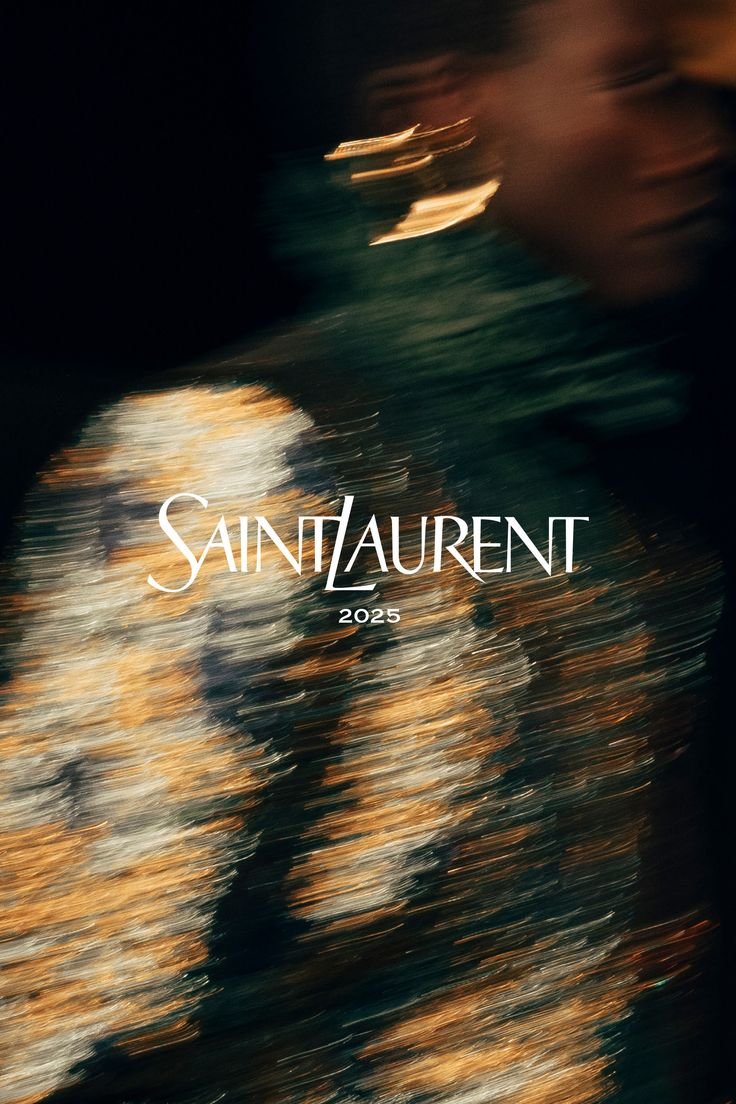
In a year when nearly every major fashion house was rethinking, restructuring, or rebranding, Saint Laurent rose to become the most in-demand luxury brand in the world. What makes this achievement remarkable is not that the brand reinvented itself, but that it refused to. The entire industry has been moving through its most chaotic era in over a decade, creative-director rotations, sudden aesthetic shifts, panic-driven pivots, experimental marketing, and a scramble to chase “viral” fashion moments. Yet while the landscape swirled, Saint Laurent stayed still. It strengthened its roots. It sharpened its identity. And in doing so, it did what so few brands today have the discipline to accomplish: it built long-term power.
The 2025 Lyst Index officially confirmed Saint Laurent as the hottest brand of the year, a milestone that surprised many who had assumed the number-one spot would continue to be dominated by louder, more buzz-oriented houses. But the ranking was not a fluke. It was the accumulation of ten years of creative clarity under Anthony Vaccarello - ten years of refinement, repetition, and commitment to a couture-level identity in a ready-to-wear world obsessed with speed.
A Year Defined by Creative Director Musical Chairs
To understand why Saint Laurent stands out so dramatically, we have to look at the year it’s emerging from. 2025 has been a carousel of creative-director appointments. Some of the biggest luxury names—Gucci, Louis Vuitton, Alexander McQueen, Chloé, and more—have either announced new visionaries or cycled through directors so quickly that the brands’ core messages became blurred.
For brands like Gucci, this turbulence has been financially damaging. After years of trying to recalibrate its creative identity—from maximalist eclecticism to soft minimalism to a more “quietly luxurious” approach—its audience has struggled to understand who Gucci is now. When a brand changes direction too frequently, even loyal customers lose their sense of alignment and desire.
Fashion relies on emotion: the emotional resonance of identity, of aspiration, of belonging. When that emotion changes constantly, the consumer loses the connection that drives long-term loyalty. The result? Confusion, hesitation, and eventual customer drop-off.
Meanwhile, Saint Laurent, part of the Kering conglomerate just like Gucci and Balenciaga, maintained internal stability. Vaccarello celebrated a decade at the house—a near-mythical tenure in modern fashion. That longevity is not just an HR achievement; it’s a strategic one. It gave Saint Laurent a coherent evolution rather than constant reinvention.
Ten Years of Creative Clarity
Vaccarello’s Saint Laurent is built on a set of codes that the brand never abandoned: architectural lines, razor-sharp tailoring, a dark-toned sensuality, uncompromising confidence, and a deep respect for the brand’s Parisian heritage. Whether it’s a smoking jacket, a sculptural trench dress, a sheer bodysuit, or a clean power-shouldered coat, every look communicates an unmistakable message: power, sophistication, seduction.
In a world where endless novelty is often confused with progress, Saint Laurent did something radical—it repeated itself.
Repetition in fashion is misunderstood. Some interpret it as stagnation. But at the luxury level, repetition is how a brand builds identity. It’s how a silhouette becomes iconic, how a garment becomes instantly recognizable, and how a customer feels a sense of familiarity and trust. Chanel has the tweed jacket. Hermès has the Kelly. Dior has the Bar. And today, Saint Laurent has its bow blouses, sculptural evening nylon, and the trench-coat dress.
The Spring/Summer 2026 collection demonstrated this philosophy with bold clarity. Critics online pointed out the repetition: nine looks featuring the oversized white bow shirt, fifteen trench-coat dresses in various shades, and fourteen dramatic, almost sculptural nylon gowns. But this was not laziness—it was intention. It was mastery.
By presenting variations of a theme, Vaccarello creates a visual vocabulary. Each collection becomes another chapter in the brand’s ongoing story, not a complete rewrite. This consistency allows audiences to develop emotional memory, the anchor of luxury loyalty.
Clarity vs. Chaos: The Customer’s Desire for Identity
The average luxury consumer today is overwhelmed. Between micro-trends, TikTok fashion cycles, the rise of AI styling, and an oversaturated influencer market, the industry has become noisy. In this noise, clarity is now the new luxury.
Saint Laurent delivers clarity like no other. You know exactly who the Saint Laurent woman is: strong, sensual, elegant, minimal, and slightly untouchable. You know what the brand stands for: power dressing, monochromatic sophistication, and bold simplicity. You know how the clothes will feel, how they will fall on the body, how they will move. This predictability is not boring; it’s luxurious. Consistency becomes a form of emotional security for the customer.
Where other brands try to capture attention through novelty, Saint Laurent captures it through identity.
The Power of Emotional Continuity
Vaccarello’s decade-long tenure allowed Saint Laurent to cultivate something far more valuable than virality: emotional continuity. Every collection, campaign, and runway reinforces the same feeling. Whether it's a black-and-white campaign shot against the Eiffel Tower or a sculptural shoulder silhouette gliding down the runway, the brand is not just creating clothing—it is creating an emotional world. Luxury at its highest level is not about the object; it's about the feeling the object communicates. Saint Laurent has mastered that feeling.
Through visually cohesive storytelling and design, the brand offers its audience the deepest desire of the luxury consumer: a stable identity through which they can express—and elevate—their own.
A Lesson in Long-Term Brand Building
Saint Laurent’s rise in 2025 is not just a fashion moment; it’s a business lesson. Brands that chase trends will peak and drop. Brands that anchor themselves in their essence will rise steadily, sustainably, and with cultural significance.
Saint Laurent’s moment is not the product of trend-chasing, marketing gimmicks, or designer-switch hype cycles. It’s the outcome of long-term brand discipline—something increasingly rare in today’s fast-turnover market.
If every other house is reacting, Saint Laurent is reflecting. If others are restarting, Saint Laurent is refining. If others are panicking, Saint Laurent is quietly building.
The Role of Luxury Brand DNA in YSL’s Success
At the heart of Saint Laurent’s ascent is its unshakeable luxury brand DNA. While most brands treat their DNA as a starting point—something flexible, alterable, or negotiable—Saint Laurent treats it as the foundation. Everything the house creates, from its collections to its campaigns to its retail experiences, is aligned with this core identity.
Brand DNA is not an aesthetic. It is the spiritual backbone of a house. It determines how the brand speaks, behaves, designs, and dreams. YSL’s DNA is anchored in strength, sensual minimalism, and Parisian allure. By refusing to dilute it, the brand built something invaluable: trust. Consumers know exactly what they will get before they even see the collection. This consistency creates desire, reliability, and loyalty—three pillars of lasting luxury power.
While competitors stretched themselves thin trying to be everything to everyone, YSL moved with calm precision, choosing not to evolve for the sake of evolution, but only when evolution felt authentic to its identity.
This commitment to brand DNA became YSL’s competitive advantage. It turned clarity into desirability, discipline into distinctiveness, and consistency into cultural relevance. In a world addicted to change, Saint Laurent proved that the bravest and most luxurious thing a brand can do is stay exactly, unapologetically, itself.