
The Luxury Market Is Entering a New Cycle — And Small Brand Founders Need to Prepare Now
The Luxury Market Is Entering a New Cycle — And Small Brand Founders Need to Prepare Now
For the past few years, fashion and luxury have been living inside a strange kind of optimism.
After the shock of 2020, the industry bounced back with surprising force. Consumers returned to shopping. Luxury spending surged. Brands raised prices. New labels launched. Social media made it look as though everyone was building, buying, travelling, styling, investing, expanding.
For many emerging designers and small brand founders, this created the feeling that the market was wide open.
And in many ways, it was.
The post-pandemic period gave fashion brands a rare emotional advantage. People wanted to feel alive again. They wanted beauty, identity, status, sensuality, escape, reinvention. Fashion became part of the recovery fantasy. Luxury was not just about product; it was about reclaiming life.
But cycles do not rise forever.
The graphs above show a familiar economic pattern: expansion, slowdown, second expansion, overconfidence, then contraction. For the fashion and luxury industry, this pattern matters deeply. Not because it predicts the future perfectly, but because it reveals where many brands may be standing right now.
We are no longer in the easiest part of the cycle.
The next year could be far more challenging for small and emerging brands. Consumer confidence is softer. Costs are rising. Paid marketing is more expensive. Wholesale buyers are more cautious. Luxury customers are becoming more selective. The aspirational shopper is under pressure. And many small brands are still operating without strong enough sales systems to survive a real downturn.
This does not mean the end of opportunity.
It means the end of easy opportunity.
For small brand founders, the message is clear: now is the time to strengthen sales, protect cash flow, deepen customer relationships, and build a business that can survive economic turbulence.
Because in the next phase of the market, being beautiful will not be enough.
A brand will need to sell.
The Expansion Years Made Many Brands Feel Stronger Than They Really Were
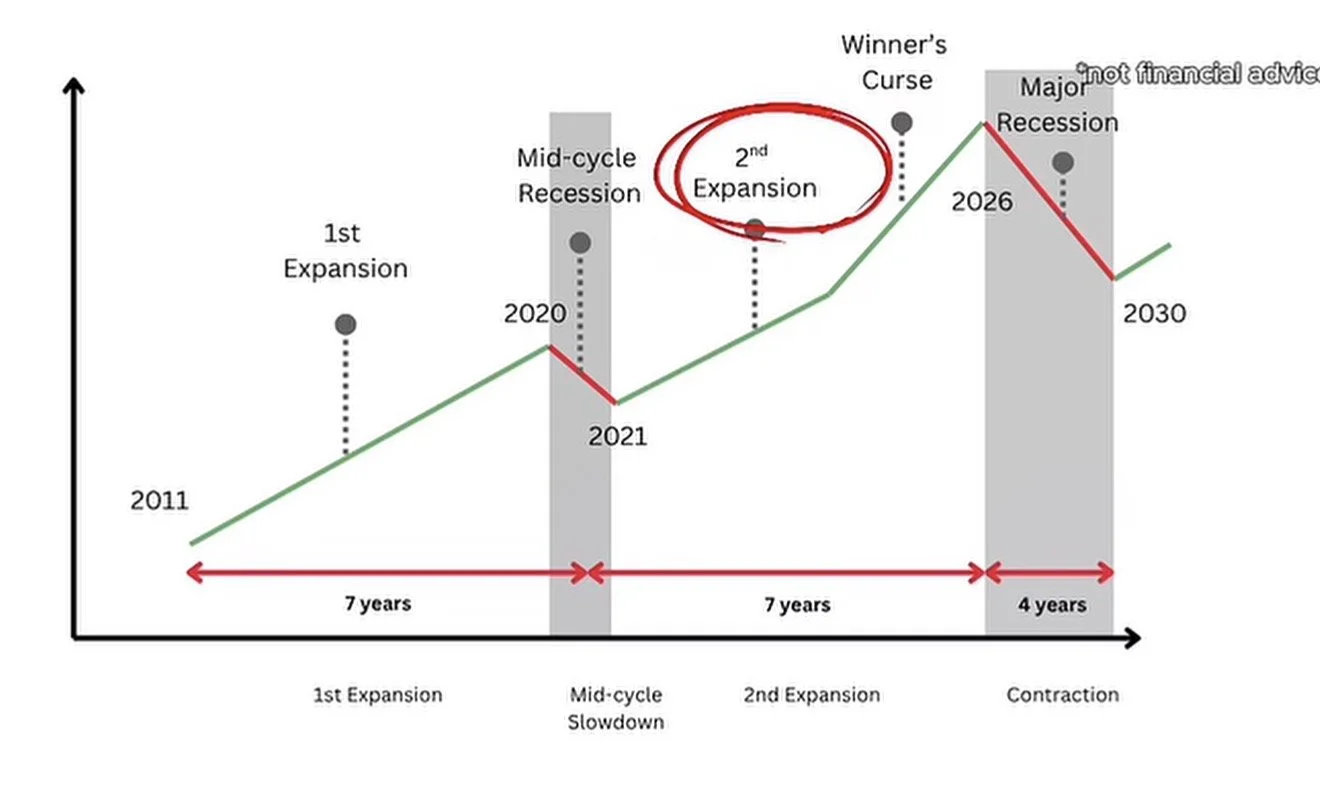
During an expansion cycle, almost everything feels easier.
Customers spend more freely. Buyers take more risks. Investors are more optimistic. Press is more open to newness. Pop-ups feel exciting. Influencers are willing to collaborate. Paid ads convert better. Consumers are more willing to try a new brand.
For small fashion brands, this can create a dangerous illusion.
A founder may believe the brand is working because there is attention. There are likes. There are nice comments. There are a few strong sales moments. A boutique places an order. A stylist pulls pieces for a shoot. A celebrity wears the product once. A launch sells a handful of units quickly.
All of this can be encouraging. But it does not always mean the business is strong.
There is a difference between brand heat and brand health.
Brand heat is visibility. It is excitement, press, social engagement, hype and aesthetic appeal.
Brand health is repeat purchase, margin, cash flow, conversion, stock control, customer loyalty, sell-through, operational discipline and the ability to generate revenue consistently.
In a booming market, brand heat can disguise weak brand health.
When consumers are confident, they are more forgiving. They may tolerate higher prices, longer delivery times, limited customer service, confusing sizing, inconsistent storytelling or an unclear product offer. They may buy because the brand feels new and exciting.
But when the economy becomes uncertain, customers become more careful. They do not stop wanting beauty, but they need more reasons to buy. They compare. They delay. They ask whether the product is truly worth it. They think about cost-per-wear. They look for quality. They wonder whether they should save instead.
This is where many emerging brands get exposed.
The market turns around and asks: beyond the moodboard, what is the business?
The “Winner’s Curse” in Emerging Fashion
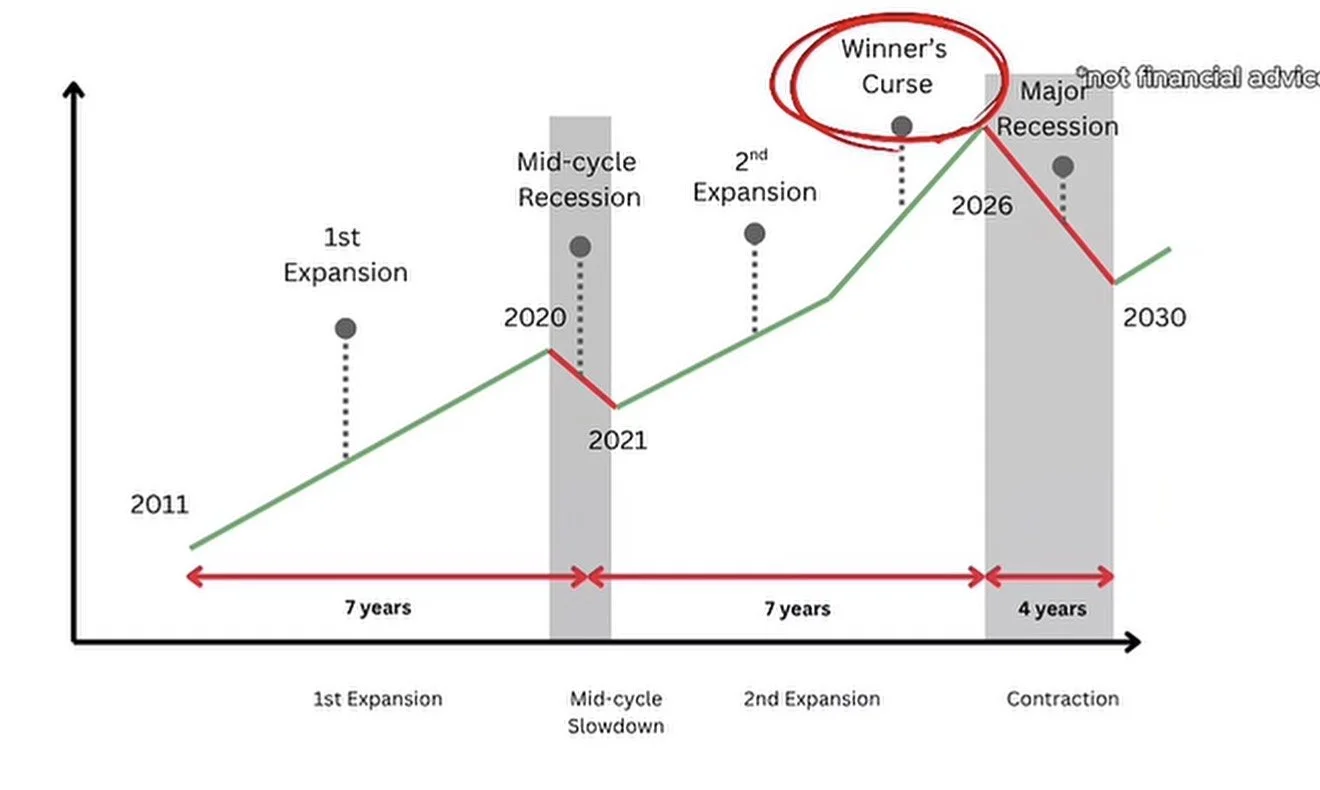
One of the most important ideas from the graphs is the “winner’s curse.”
In economics, the winner’s curse often describes what happens when someone wins an auction by overpaying. They technically win, but the price they paid makes the victory less valuable.
In fashion, the winner’s curse looks slightly different.
It happens when a brand grows too quickly, prices too aggressively, produces too much, hires too fast, spends too heavily on marketing, opens too many channels, or builds a business based on best-case assumptions.
The brand appears to be winning.
But underneath, the founder may be carrying too much risk.
For a small brand, the winner’s curse can look like this:
You get a strong launch, so you produce more inventory than your customer base can realistically absorb.
You receive press attention, so you invest in a bigger campaign before the sales funnel is ready.
You get stocked by a boutique, so you build your whole strategy around wholesale before your margins are stable.
You see competitors raising prices, so you raise yours without strengthening perceived value.
You get social media traction, so you assume demand is deeper than it actually is.
You have a beautiful brand world, so you delay building proper sales systems because the brand “should” sell itself.
This is where emerging brands can quietly become fragile.
The danger is not ambition. Ambition is necessary. The danger is building a cost structure around optimism rather than evidence.
A small brand does not usually collapse because it lacked creativity. More often, it collapses because it ran out of cash, overproduced, failed to convert attention into sales, or did not have enough repeat customers to carry it through slow months.
The winner’s curse is especially relevant now because many brands built their expectations during an unusually emotional post-pandemic market. That market rewarded fantasy, novelty and identity. But the next phase will reward discipline.
Founders need to ask themselves a hard question:
Did the brand grow because the business model is strong, or because the market was temporarily generous?
Why the Next Year Could Be Difficult for Small Brands
The next year is likely to be defined by pressure.
Not necessarily collapse. Not necessarily disaster. But pressure.
For small fashion and luxury brands, pressure often arrives in several places at once.
Production costs rise. Fabric, trims, packaging, shipping, duties and manufacturing become more expensive. Suppliers may increase minimums or require larger deposits. Currency shifts can affect imported materials. Freight delays can disrupt launches.
At the same time, consumers become more cautious. They may still love the brand, but they buy later. They wait until payday. They ask more questions. They abandon carts. They save items but do not check out. They engage with content but do not convert.
Wholesale becomes tighter too. Buyers reduce risk. They place smaller orders. They focus on proven categories. They ask for exclusivity or better terms. They may delay payment. They may choose established brands over emerging ones because they feel safer.
Marketing also becomes harder. Paid ads often become less efficient during uncertain periods because consumers are slower to purchase. Influencer partnerships may create awareness but not immediate sales. Organic reach remains unpredictable. PR creates credibility, but not always cash flow.
This creates a squeeze.
Costs go up. Sales slow down. Cash becomes tighter. Decisions become more emotional.
This is the moment when founders often panic.
They discount too heavily. They launch too many products. They spend more on marketing without fixing conversion. They chase new customers while ignoring past customers. They accept poor wholesale terms just to feel validated. They create more content but do not improve the offer.
The brands that survive the next phase will not be the ones that panic beautifully.
They will be the ones that prepare commercially.
The Aspirational Customer Is Under Pressure
Small luxury brands often depend on the aspirational customer.
This is the customer who may not be ultra-wealthy, but deeply values beauty, style, identity and status. They may save for a special piece. They may buy fewer items, but with intention. They may follow luxury culture closely. They may care about craftsmanship, storytelling, sustainability, founder energy and emotional connection.
This customer is incredibly important for emerging brands.
But they are also sensitive to economic pressure.
When rent, food, travel, debt, interest rates or job insecurity increase, this customer does not necessarily stop wanting fashion. They become more selective. They may shift from ready-to-wear to accessories. From luxury fashion to beauty. From new to resale. From full-price to sale. From impulse buying to wishlisting.
This matters because many small brands misunderstand the aspirational customer.
They assume aspiration means the customer will stretch endlessly. But aspiration has limits. If the price rises too far beyond perceived value, the customer steps back.
For emerging brands, this creates a major challenge. You may not have the heritage of a Chanel, Dior, Hermès or Saint Laurent. You may not have resale value. You may not have global recognition. So your price must be justified through other forms of value.
That value could be exceptional fit.
It could be limited production.
It could be made-to-order craftsmanship.
It could be founder intimacy.
It could be sustainability.
It could be styling versatility.
It could be a strong emotional world.
It could be community belonging.
It could be the feeling that the customer has discovered something before everyone else.
But the value must be clear.
In a downturn, vague luxury struggles. Specific luxury wins.
Customers need to understand why this product, why this brand, why this price, and why now.
The Biggest Mistake Small Brands Make During Uncertainty
The biggest mistake emerging brands make during economic uncertainty is focusing only on visibility.
Visibility matters, of course. A brand needs awareness. It needs cultural presence. It needs imagery, storytelling, content, press, partnerships and social proof.
But visibility is not the same as sales.
A founder may think, “We just need more people to know about us.”
Sometimes that is true.
But often the deeper problem is not awareness. It is conversion.
People know about the brand, but they are not buying. They follow, but they do not trust enough to purchase. They like the campaign, but they do not understand the product. They visit the website, but the product page does not persuade them. They ask about sizing, but no one follows up. They abandon cart, but there is no recovery flow. They buy once, but no one nurtures them after purchase.
In a difficult economy, founders cannot afford to pour attention into a leaking bucket.
Before spending more on PR, influencers or ads, small brands need to fix the sales journey.
Is the product offer clear?
Are the hero products obvious?
Does the website explain value quickly?
Are the product pages strong enough?
Is sizing clear?
Are returns and delivery reassuring?
Is there social proof?
Is there a reason to buy now?
Is there email capture?
Is there an abandoned cart sequence?
Is there a post-purchase journey?
Are past customers being contacted?
Is there a private client list?
Is the founder actively selling?
If the answer is no, more visibility may only create more missed opportunity.
The next year will reward brands that know how to turn attention into revenue.
Founders Need to Build Sales Systems, Not Just Campaigns
A campaign creates a moment.
A sales system creates continuity.
Small brands often live from campaign to campaign, drop to drop, launch to launch. This creates emotional highs and lows. When a launch performs well, everything feels possible. When it underperforms, the founder spirals.
A stronger business cannot depend only on launch adrenaline.
It needs a sales system that works between the big moments.
This includes email marketing, clienteling, product education, private previews, repeat customer journeys, abandoned cart flows, styling content, trunk shows, referral systems, wholesale follow-up, personal outreach and clear sales targets.
For emerging luxury brands especially, sales should feel elevated, not aggressive.
Selling does not have to cheapen the brand.
Done well, selling is service.
It is helping the customer understand the piece. It is showing them how it fits into their life. It is explaining the craftsmanship. It is guiding them toward the right size. It is reminding them when something is low in stock. It is inviting them into the brand world with care.
Luxury selling should feel like being personally attended to.
This is where small brands actually have an advantage over large houses.
A small founder can be close to the customer. They can send personal messages. They can remember names. They can offer styling advice. They can invite customers into the story. They can create intimacy that big brands struggle to replicate.
But this has to be intentional.
The founder cannot simply post and hope.
They must sell with elegance.
Your Existing Customers Are Your Strongest Asset
During a downturn, acquiring new customers becomes more expensive.
This is why your existing customers matter so much.
Many small brands are obsessed with getting new people into the brand. More followers, more press, more reach, more discovery. But the customers who have already bought from you are far more valuable than strangers.
They have already trusted you once.
That trust is gold.
A past customer is more likely to buy again if they had a good experience. They are more likely to recommend you. They are more likely to respond to a personal message. They are more likely to attend a private event. They are more likely to become part of your brand community.
But many brands neglect them.
They send the product, maybe a thank-you note, and then disappear.
This is a huge missed opportunity.
Every small brand should have a customer retention strategy. Not a complicated one. Just a thoughtful one.
After purchase, the customer should receive care guidance, styling inspiration, a personal thank-you, early access to the next drop, invitations to private previews, and recommendations based on what they bought.
If a customer buys a dress, show them how to style it across seasons.
If they buy swimwear, send them a resort wardrobe guide.
If they buy a handbag, explain how to care for the leather.
If they buy jewellery, invite them to view a matching piece before public launch.
This is not spam. This is luxury-level service.
The brands that win during turbulence will be the brands that treat customers as relationships, not transactions.
Product Discipline Will Become Essential
When the market is hot, brands can get away with too many products.
During a downturn, too much product becomes dangerous.
Every SKU carries risk. It requires design time, sampling, production, photography, copywriting, storage, marketing, customer service and cash. If it does not sell, it becomes trapped money.
Small brands need to become much more disciplined about product.
This does not mean killing creativity. It means focusing creativity where it has commercial power.
Founders should identify their hero products. These are the pieces that best express the brand and also sell consistently. A hero product is not always the most dramatic piece. Sometimes it is the simplest, most wearable, most versatile, most emotionally clear product in the collection.
Once identified, hero products should be supported properly.
They need stronger imagery. Better product pages. Styling content. Customer testimonials. Founder storytelling. Press positioning. Paid support. Email features. Private client outreach.
Too many founders give the same marketing energy to every product.
That is a mistake.
Not every product deserves equal attention.
Some products are image builders. Some are revenue drivers. Some are entry points. Some are margin builders. Some are experimental. Some should not have been produced at all.
A mature founder knows the difference.
In the next year, product editing will be a survival skill.
Cash Flow Is the Real Luxury
Fashion is glamorous from the outside, but operationally it is brutal.
You pay for samples before anything sells. You pay deposits before production starts. You pay for shoots before the campaign launches. You pay for packaging, shipping, duties, models, stylists, PR, software, website maintenance, freelancers and stock.
Then you wait.
You wait for customers to buy. You wait for wholesale payments. You wait for returns to settle. You wait for invoices. You wait for the next launch.
This is why cash flow matters so much.
A brand can look successful and still be financially fragile. It can have press, stockists, celebrities and beautiful imagery, but if cash is tied up in unsold inventory, the business is vulnerable.
Small brands need to protect cash aggressively over the next year.
This may mean smaller production runs, more pre-orders, made-to-order models, tighter stock control, better payment terms, fewer experimental SKUs, more focus on bestsellers, and less spending on activities that do not clearly support revenue.
Founders should know their numbers intimately.
What is your gross margin?
What is your average order value?
What is your repeat purchase rate?
What is your return rate?
How much inventory is sitting unsold?
How long does it take to convert stock into cash?
Which products are profitable?
Which channels actually sell?
Which marketing activities create revenue?
Which costs can be reduced without damaging the brand?
These questions are not uncreative. They are protective.
Cash flow gives a founder freedom.
Without cash, every decision becomes desperate.
Discounting Is Not a Strategy
When sales slow, many small brands immediately reach for discounts.
This can be tempting. A discount creates movement. It gives customers a reason to act. It brings in cash quickly.
But for luxury and premium-positioned brands, constant discounting can be dangerous.
It trains customers to wait. It weakens perceived value. It makes full-price customers feel foolish. It can damage relationships with wholesale partners. It can turn the brand from desirable to desperate.
This does not mean brands can never use promotions. But they need to be careful.
Instead of public discounting, emerging luxury brands should think about value-added selling.
Offer private client access.
Offer complimentary styling.
Offer limited-time personalisation.
Offer early access.
Offer a gift with purchase that feels brand-aligned.
Offer founder consultations.
Offer archive access to loyal customers.
Offer pre-order privileges.
Offer exclusive bundles privately, not publicly.
The goal is to increase the customer’s sense of value without publicly lowering the brand’s worth.
In luxury, the best offer is not always “cheaper.”
Sometimes the best offer is “closer, rarer, more personal, more considered.”
Why Founder-Led Selling Will Matter More
For emerging brands, the founder is often the most powerful sales asset.
Not because the founder should do everything forever, but because people buy into people. Especially in the early stages.
Customers want to know why the brand exists. They want to understand the vision. They want to feel the energy behind the product. They want to know what makes this brand different from the hundreds of other beautiful brands online.
Founder-led selling creates intimacy and trust.
This could look like personal styling videos, voice notes to VIP customers, founder emails, behind-the-scenes product explanations, live shopping sessions, private appointments, trunk shows, founder-hosted dinners or thoughtful direct messages.
The key is not to beg for sales.
The key is to lead the customer into the world of the brand.
A founder can explain why a silhouette was created, why a fabric was chosen, how a piece should feel on the body, what occasion it was designed for, how to style it, and why it belongs in the customer’s wardrobe.
This kind of selling feels human.
And in a market increasingly dominated by algorithms, human connection is a serious advantage.
The Brands That Prepare Now Will Be the Ones That Survive
Economic turbulence does not destroy every brand.
It reveals the truth.
Small brand founders should not wait until sales slow dramatically to act. By then, decisions become reactive. The best time to strengthen the business is before the pressure fully arrives.
That means building the sales system now.
The brands that do this will not just survive a downturn. They may come out stronger.
Because downturns clear space. They remove weaker competitors. They make customers more discerning. They reward brands with substance. They force founders to become better operators.
For the emerging brand sector, this could become a defining reset.
The brands built only on image may struggle.
The brands built on image, intimacy and intelligent sales will endure.
The New Rule for Emerging Luxury: Desire Must Become Revenue
Luxury has always been built on desire.
But in the next phase of the cycle, desire must be converted with more precision.
It is not enough for a customer to admire the brand. They must understand the product. They must trust the price. They must feel urgency. They must feel reassured. They must feel seen. They must feel that buying is not just a transaction, but an intelligent emotional decision.
That is the founder’s challenge now.
To protect the dream while strengthening the engine behind it.
This is not about becoming less creative. It is about becoming more resilient.
A beautiful brand with weak sales is vulnerable.
A beautiful brand with strong sales, loyal customers, disciplined product, healthy margins and clear positioning is powerful.
The coming year may not be easy. But it can be clarifying.
For small brand founders, this is the moment to stop waiting for the market to carry the brand. The market is changing. Consumers are changing. The luxury cycle is changing.
Because the next chapter of fashion will not belong to the brands that simply looked expensive.
It will belong to the brands that were built to last.